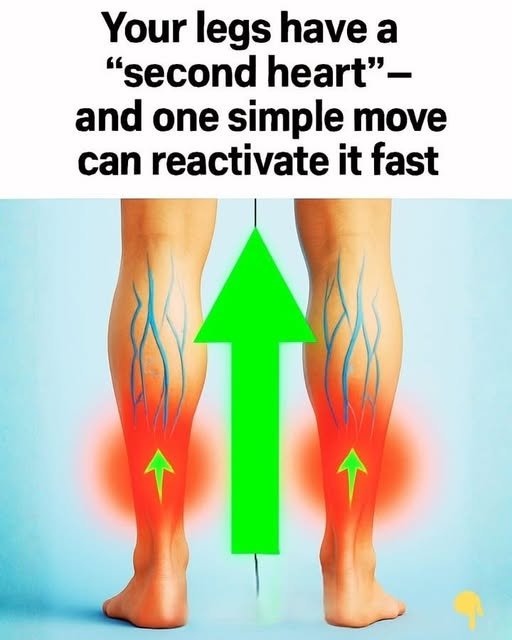
Your Legs Have a “Second Heart” — and One Simple Move Can Reactivate It Fast
Most people think of the heart as the body’s only pump, tirelessly pushing blood through the circulatory system. But what many don’t realize is that your legs play a powerful supporting role in circulation—so important that they’re often referred to as having a “second heart.”
This “second heart” isn’t an organ, but a system: the calf muscles. When they contract, they help push blood from the lower body back up toward the heart. When they’re inactive for long periods, circulation can slow, leading to heavy legs, swelling, stiffness, and fatigue. The good news? There’s one simple movement that can quickly reactivate this system and get blood flowing again.
What Is the “Second Heart” in Your Legs?
The term “second heart” is commonly used to describe the calf muscle pump. Every time you walk, stand on your toes, or flex your ankles, your calf muscles contract. These contractions squeeze the deep veins in the lower legs, pushing blood upward against gravity.
Because veins have one-way valves, the blood moves toward the heart and doesn’t fall back down. This mechanism is essential for healthy circulation, especially since blood in the legs must travel upward, working against gravity.
When the calf muscles are active, circulation is efficient. When they’re inactive—such as during long periods of sitting or standing still—blood can pool in the lower legs.
Why the “Second Heart” Can Become Dormant
Modern lifestyles often limit natural leg movement. Long hours at a desk, extended screen time, driving, or even standing still for long shifts can all reduce calf muscle activity.
When the calf muscles aren’t contracting regularly:
-
Blood flow from the legs slows down
-
Legs may feel heavy or tired
-
Ankles and feet may swell
-
Stiffness and discomfort can increase
Over time, this reduced circulation can affect overall comfort and mobility, especially as we age.
The Simple Move That Reactivates It Fast
The most effective and accessible way to activate your leg “second heart” is the calf raise.
This movement directly engages the calf muscles, triggering the muscle pump that helps move blood upward through the veins. The best part? You can do it almost anywhere, at any time, and without equipment.
How to Do a Basic Calf Raise
-
Stand upright with feet hip-width apart
-
Slowly lift your heels off the ground, standing on your toes
-
Hold for 1–2 seconds at the top
-
Lower your heels back down slowly
-
Repeat 15–20 times
This simple motion mimics the natural pumping action that happens when you walk, instantly encouraging better circulation in the lower legs.
Why This Movement Works So Quickly
Calf raises are effective because they:
-
Directly activate the deep calf muscles
-
Compress veins and stimulate upward blood flow
-
Engage circulation within seconds
-
Improve oxygen delivery to tissues
Many people notice an immediate sensation of warmth or lightness in their legs after just one short set.
When to Use This Simple Move
Calf raises are especially helpful:
-
After long periods of sitting
-
During travel or long flights
-
After standing for long hours
-
When legs feel heavy or stiff
-
As part of a daily movement routine
They’re gentle enough to do multiple times per day and can easily be incorporated into existing habits.
Other Simple Ways to Support Your Leg “Second Heart”
While calf raises are powerful on their own, combining them with other small habits can further support circulation:
-
Ankle circles: Rotate ankles in both directions while seated
-
Walking breaks: Short walks every 30–60 minutes
-
Foot flexing: Point and flex toes while sitting
-
Leg elevation: Elevate legs briefly at the end of the day
All of these movements encourage regular muscle contraction, helping the circulatory system do its job more efficiently.
Who Can Benefit the Most?
Almost everyone can benefit from activating their leg muscle pump, but it’s especially helpful for:
-
People who sit for long hours
-
Office workers and remote workers
-
Travelers
-
Older adults
-
Anyone experiencing leg heaviness or stiffness
Because the movement is low-impact, it’s accessible to people of most fitness levels.
Making It a Daily Habit
The key to long-term benefit is consistency. Instead of viewing calf raises as exercise, think of them as a circulation reset.
Try linking them to daily routines:
-
Do a set while brushing your teeth
-
Do them while waiting for coffee to brew
-
Do them during TV commercials
-
Do them before bed
Small, repeated movements throughout the day are often more effective than one long session.
A Small Move With Big Impact
The idea that your legs have a “second heart” highlights how important movement is for overall well-being. While the heart does the heavy lifting, the calf muscles provide crucial support—especially in a world where we move less than ever before.
By using one simple movement like calf raises, you can quickly reactivate this system, encourage healthy circulation, and reduce everyday discomfort in the legs.
Sometimes, the most powerful changes don’t require complex routines or expensive tools—just a small, intentional move done regularly.
Final Thought
Your body was designed to move, and even the smallest movements can have meaningful effects. By waking up your leg “second heart” with a simple calf raise, you give your circulation the gentle push it needs—fast, easy, and right where you are.