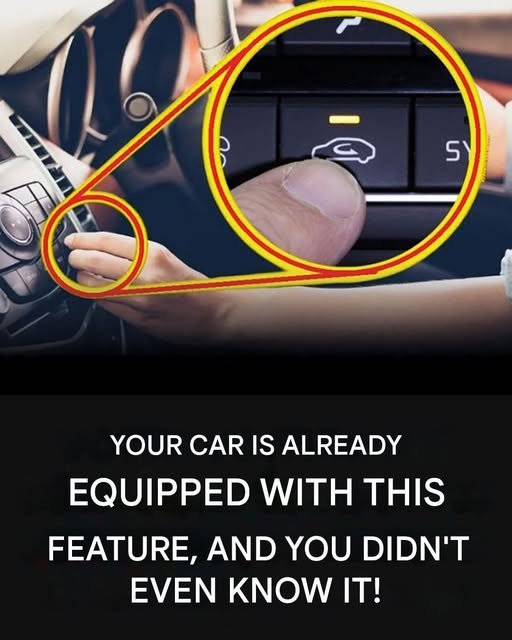
Your Car Is Already Equipped With This Feature — And You Didn’t Even Know It
Modern cars are packed with technology, yet many drivers only use a fraction of what their vehicle is capable of. While touchscreens, backup cameras, and Bluetooth connectivity get plenty of attention, there are hidden or underused features already built into most cars that quietly improve safety, efficiency, and comfort — often without drivers realizing they exist.
One of the most surprising facts about modern vehicles is that you may already be driving with a powerful feature activated by default, even if you’ve never noticed it. It doesn’t require an upgrade, subscription, or special trim package. In many cases, it’s been there all along.
The Overlooked Feature: Engine Braking and Fuel Cut-Off
One of the most common built-in features drivers don’t realize they’re using is engine braking combined with automatic fuel cut-off.
What Is It?
When you take your foot off the accelerator while driving — especially at higher speeds — your car’s engine often stops injecting fuel entirely. At the same time, the engine helps slow the car down naturally. This process is known as engine braking with fuel cut-off, and it’s been standard in most modern vehicles for years.
Many drivers assume the car continues to use fuel whenever it’s moving. In reality, during deceleration, your engine may be using zero fuel at all.
Why Most Drivers Don’t Notice It
This feature works quietly in the background, without lights, alerts, or dashboard notifications. There’s no button to press, and no menu to enable it. Because it feels completely natural, most drivers never realize it’s happening.
The car simply:
-
Slows smoothly when you lift off the accelerator
-
Maintains stability without constant braking
-
Improves fuel efficiency automatically
Since there’s no obvious signal, the feature often goes unnoticed.
How This Feature Helps You Every Day
1. Saves Fuel Without Effort
During deceleration, many modern fuel-injected engines completely shut off fuel delivery. That means when you’re coasting downhill or slowing down, your fuel consumption may drop to zero.
Over time, this contributes to:
-
Better fuel economy
-
Lower emissions
-
Reduced fuel costs
All without changing your driving habits.
2. Reduces Brake Wear
Because the engine helps slow the vehicle naturally, your brake system doesn’t have to work as hard. This can:
-
Extend brake pad life
-
Reduce brake overheating
-
Improve control on long downhill drives
It’s especially useful in hilly or mountainous areas.
3. Improves Vehicle Stability
Engine braking provides a smooth, controlled deceleration that helps maintain traction. This is particularly helpful:
-
On slippery roads
-
During downhill driving
-
In stop-and-go traffic
The gradual slowing reduces sudden weight shifts, making the car easier to control.
Cars Have Been Getting Smarter — Quietly
This is just one example of how vehicles have become more intelligent over time. Automakers often integrate improvements that don’t require driver input, such as:
-
Automatic alternator regulation
-
Smart cooling fans
-
Adaptive transmission behavior
-
Idle speed optimization
These features don’t feel like “technology” because they don’t interrupt the driving experience — but they are constantly working behind the scenes.
Other Common Features You Might Not Know You Have
Auto Door Locking
Many cars automatically lock the doors once you reach a certain speed, even if you never pressed the lock button.
Brake Assist
If the system detects emergency braking, it may increase braking force automatically — even if you didn’t press the pedal harder.
Hill Start Assist
On inclines, your car may briefly hold the brakes when you release the pedal, preventing rollback.
Smart Alternator Charging
Your vehicle may charge the battery more efficiently during deceleration, reducing engine load during acceleration.
All of these features are often standard — not premium upgrades.
Why Automakers Don’t Always Advertise These Features
Manufacturers tend to highlight flashy features that are easy to market, like screens or driver-assist systems. Subtle mechanical and software improvements don’t photograph well, and they’re harder to explain in short ads.
As a result, many practical features:
-
Go unnoticed by owners
-
Are assumed to be “normal driving behavior”
-
Never get explored in the owner’s manual
Yet they make a real difference in everyday driving.
How to Take Advantage of This Feature
You don’t need to change much — but a few habits can help maximize the benefit:
-
Anticipate stops and lift off the accelerator early
-
Coast instead of braking hard when possible
-
Avoid unnecessary acceleration and braking
These habits work with your car’s built-in systems instead of against them.
A Reminder to Explore Your Owner’s Manual
While not the most exciting read, your owner’s manual often reveals features you didn’t know existed. Even a quick skim can uncover:
-
Hidden functions
-
Efficiency tips
-
Safety features you’re already using
Many drivers are surprised to learn just how much their car is doing automatically.
The Bigger Picture
Modern vehicles are designed to be smarter, safer, and more efficient without demanding constant attention from the driver. Features like engine braking with fuel cut-off show how technology can improve driving without adding complexity.
You don’t always need the latest model or an expensive upgrade to benefit from innovation. Sometimes, the feature you didn’t know about has been there all along — quietly saving fuel, reducing wear, and making your drive smoother.
Conclusion
Your car is already equipped with more intelligence than you may realize. Features like automatic fuel cut-off during deceleration work silently in the background, helping you save fuel, protect your brakes, and maintain control — all without a single button press.