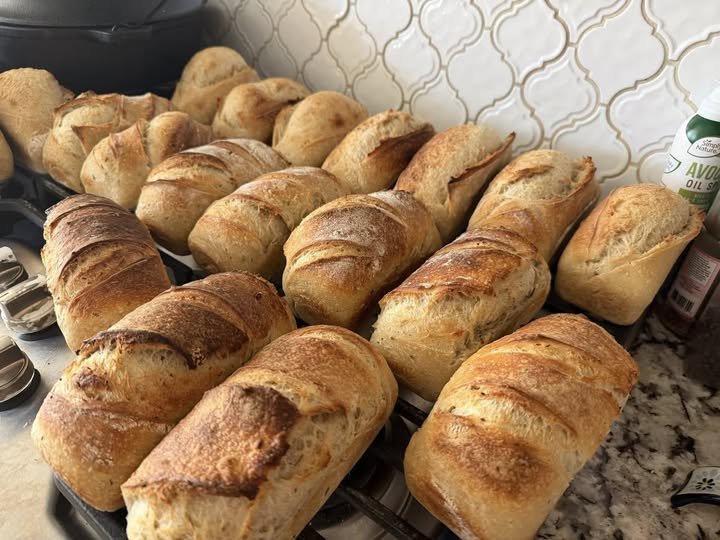
Sourdough Sandwich Bread (Soft, Tangy, Perfect for Toast and Sandwiches)
There’s something magical about homemade sourdough bread: a tender, soft crumb, a slightly tangy flavor, and a golden crust that’s perfect for sandwiches, toast, or just eating with butter. This recipe guides you step by step to create a light, airy sourdough loaf with enough structure to hold fillings without collapsing.
Whether you’re an experienced baker or just getting started with sourdough, following these times, temperatures, and tips will help you get consistent, bakery-quality results at home.
Why You’ll Love This Recipe
-
Soft, pillowy interior ideal for sandwiches
-
Slightly tangy flavor without being overpowering
-
Golden brown crust that’s tender, not tough
-
Made with natural sourdough starter—no commercial yeast needed
-
Easy shaping instructions for a uniform loaf
Recipe Overview
Prep Time: 20 minutes (plus starter feeding)
Bulk Fermentation: 4–6 hours (depending on room temperature)
Proofing: 1–2 hours
Bake Time: 35–40 minutes
Baking Temperature: 375°F (190°C)
Yield: 1 standard loaf (8–9 inches)
Difficulty Level: Intermediate
Ingredients
For the Dough
-
1 cup (240 g) active sourdough starter (fed and bubbly)
-
1½ cups (360 ml) warm water, 75–80°F (24–27°C)
-
4 cups (500 g) all-purpose or bread flour
-
2 tablespoons sugar or honey
-
2 teaspoons salt
-
2 tablespoons unsalted butter, softened
Optional
-
Milk or egg wash for a shiny crust
Step-by-Step Instructions
Step 1: Feed and Prepare Your Starter
Ensure your sourdough starter is active and bubbly, usually 4–8 hours after a feeding. This is key for a strong rise and good flavor.
Step 2: Mix the Dough
In a large bowl, combine water and sourdough starter. Stir until dissolved. Add flour, sugar, and salt. Mix until all ingredients are incorporated into a shaggy dough. Let it rest for 20–30 minutes (autolyse step) to allow the flour to hydrate—this improves gluten development.
Add softened butter and knead for 8–10 minutes until smooth, elastic, and slightly tacky. You can knead by hand or with a stand mixer using a dough hook.
Step 3: Bulk Fermentation
Place the dough in a lightly greased bowl, cover with a damp cloth or plastic wrap. Let it rise at room temperature (~75°F / 24°C) for 4–6 hours, performing stretch-and-folds every 30 minutes for the first 2 hours to strengthen the dough.
The dough should roughly double in size and be airy but not overproofed.
Step 4: Shape the Loaf
Gently deflate the dough on a floured surface. Shape it into a tight loaf: flatten the dough into a rectangle, fold the sides in, then roll it from bottom to top. Pinch the seam closed and tuck the ends under.
Place the shaped dough in a greased 9×5-inch loaf pan or on a parchment-lined baking sheet.
Step 5: Final Proof
Cover the loaf lightly and let it proof at room temperature for 1–2 hours, or until it rises about 50–75%. Avoid overproofing; the dough should still feel slightly springy.
(Optional: Brush with milk or beaten egg for a shiny, golden crust.)
Step 6: Bake
Preheat the oven to 375°F (190°C). Bake the loaf for 35–40 minutes, until the top is golden brown and the internal temperature reaches 200–205°F (93–96°C).
If the crust browns too quickly, tent with foil after 25 minutes.
Step 7: Cool Before Slicing
Remove the bread from the pan and place on a wire rack. Let cool completely for at least 1 hour before slicing. This allows the crumb to set and prevents a gummy texture.
Tips for Perfect Sourdough Sandwich Bread
-
Active Starter: Your starter must be bubbly and active for a good rise.
-
Temperature Control: Room temperature affects fermentation time—cooler rooms require longer proofing.
-
Stretch and Fold: Builds gluten without over-kneading.
-
Don’t Rush Cooling: Cutting too soon can ruin the texture.
-
Optional Flavors: Add herbs, cheese, or seeds for a twist.
Storage
-
Room Temperature: Store in a bread box or paper bag for 2–3 days.
-
Refrigerator: Can last up to 5 days but may dry out slightly.
-
Freezing: Slice before freezing. Wrap tightly in foil or freezer-safe bags. Reheat slices in toaster or oven.
Serving Ideas
-
Classic sandwiches: ham, turkey, or roast beef
-
Toast with butter, jam, or avocado
-
Grilled cheese with sharp cheddar
-
French toast for brunch
Final Thoughts
This Sourdough Sandwich Bread combines a soft, tender crumb with a gentle tang that elevates ordinary sandwiches. By controlling fermentation, shaping, and baking temperatures, you can achieve bakery-quality bread at home. Once you master this recipe, it’s easy to customize with whole grains, seeds, or herbs for endless variations.