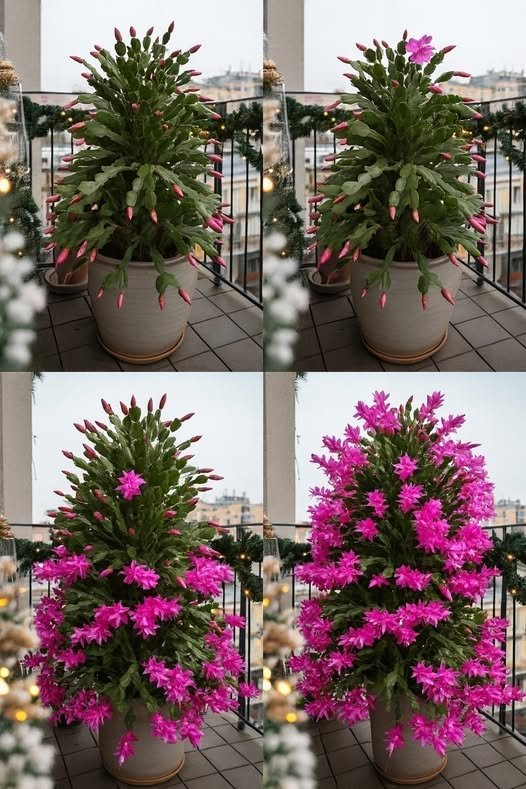
How I Get My Christmas Cactus to Bloom Nonstop — The Secret Method Revealed
If you’ve ever struggled to get your Christmas cactus to bloom year after year, you’re not alone. These gorgeous, festive plants are known for their bright, tubular flowers that bring color to the dullest winter months—but without the right care, they can stay green for months without a single bloom. I’ve spent years experimenting and learning from experienced gardeners, and I finally discovered the secret to keeping my Christmas cactus blooming nonstop. Here’s the method I swear by.
Understanding the Christmas Cactus
Before diving into the method, it’s important to understand the plant itself. The Christmas cactus (Schlumbergera bridgessii) is a tropical plant native to Brazil. Unlike desert cacti, it thrives in humid, shaded environments and blooms in response to changes in day length and temperature.
Key points about Christmas cactus:
-
Blooms in late fall to winter.
-
Needs short-day conditions (long nights) to trigger flower buds.
-
Prefers slightly acidic soil and indirect light.
The Common Problems
Many people fail to get their cactus to bloom because of one or more of the following:
-
Too much light or heat: Direct sunlight can scorch leaves and prevent flower formation.
-
Overwatering or underwatering: Inconsistent watering stresses the plant.
-
Lack of dormancy: The plant needs a rest period to bloom again.
-
Wrong day/night conditions: Long nights are essential for bud formation.
My Secret Method for Nonstop Blooms
Here’s the method I use to get continuous, vibrant blooms:
1. Control Light Exposure
Christmas cacti are photoperiodic, meaning they bloom when exposed to long nights (12–14 hours of darkness) and short days. I place my cactus in a dark room or cover it with a box from 6 PM to 8 AM for about 6–8 weeks starting in early fall. During the day, I provide bright but indirect sunlight.
2. Perfect Temperature
The ideal temperature for bud formation is 60–70°F (15–21°C). Cooler nights help trigger flower buds. Avoid placing your plant near heaters, drafts, or vents.
3. Water Carefully
Water only when the top inch of soil feels dry. Overwatering can rot roots, while underwatering stresses the plant. Once buds appear, I slightly reduce watering to prevent flowers from dropping prematurely.
4. Fertilize Smartly
I use a balanced, water-soluble fertilizer (10-10-10) every 2–3 weeks during the growing season. When flower buds start forming, I switch to a phosphorus-rich fertilizer to encourage strong blooms.
5. Provide Rest Between Blooms
After a flowering cycle, I give my cactus a rest period of 4–6 weeks. During this time, I reduce water and stop fertilizing. This dormancy allows the plant to recharge for the next blooming cycle.
6. Rotate for Even Growth
To keep blooms evenly distributed, I rotate my cactus every few weeks. This ensures all sides receive adequate light.
Bonus Tips for Continuous Flowers
-
Humidity: Mist leaves occasionally or place the plant near a humidity tray.
-
Pruning: After blooming, pinch off any leggy or weak stems to promote bushier growth.
-
Repotting: Repot every 2–3 years in fresh, well-draining soil to avoid nutrient depletion.
The Result
By following this method, my Christmas cactus blooms multiple times a year, producing vibrant flowers that last for weeks. It transforms my home into a festive paradise and requires surprisingly little work once the routine is set.
Final Thoughts
The key to getting a Christmas cactus to bloom nonstop is understanding its natural cycles and replicating them indoors. Controlled light, consistent watering, proper temperature, and strategic rest periods are all part of the secret. With patience and care, your cactus can become a year-round flower powerhouse that never fails to impress.