-
Prep Time: 20 minutes (plus 4 hour inactive marinating time)
-
Cook Time: 30 minutes
-
Total Time: 4 hours 50 minutes
-
Servings: 4 servings
-
Intensity Level: Medium. The process is straightforward, but it requires managing multiple stations (dredging, frying) and careful attention to oil temperature for a perfect crust.
Ingredients
For the Steak & Brine
-
4 (about 6-8 oz each) cube steaks, tenderized
-
2 cups full-fat buttermilk
-
1 tablespoon hot sauce (such as Tabasco or Crystal)
-
1 teaspoon garlic powder
-
1 teaspoon kosher salt
For the Dredging Station
-
2 cups all-purpose flour
-
1/4 cup cornstarch (this is the secret to extra crispiness)
-
1 tablespoon garlic powder
-
1 tablespoon onion powder
-
1 tablespoon paprika
-
1 teaspoon cayenne pepper (optional, for heat)
-
2 teaspoons kosher salt
-
1 teaspoon freshly ground black pepper
-
2 large eggs
-
1/4 cup buttermilk (reserved from the brine)
-
2 tablespoons hot sauce (reserved from the brine)
For Frying
-
Peanut or vegetable oil, for frying (about 3-4 cups)
For the Country Gravy
-
1/4 cup reserved frying oil (or bacon drippings for extra flavor)
-
1/4 cup all-purpose flour
-
2 cups whole milk, warm
-
1/2 teaspoon kosher salt
-
1-2 teaspoons freshly ground black pepper (the hallmark of country gravy is its bold pepperiness)
Instructions
Phase 1: The Buttermilk Brine (Intensity: Low)
-
Tenderize: If your cube steaks aren’t already tenderized, use a meat mallet to pound them to an even 1/4-inch thickness between two sheets of plastic wrap. This ensures uniform cooking.
-
Combine: In a large, shallow dish or a resealable plastic bag, whisk together the 2 cups of buttermilk, 1 tablespoon of hot sauce, 1 teaspoon of garlic powder, and 1 teaspoon of kosher salt.
-
Marinate: Add the steaks, ensuring they are fully submerged. Cover and refrigerate for at least 4 hours, or up to 8 hours. This step is non-negotiable; the acid in the buttermilk tenderizes the tough steak and infuses it with moisture and flavor.
Phase 2: The Dredging Station (Intensity: Medium)
-
Set Up: About 30 minutes before you’re ready to fry, remove the steaks from the refrigerator to take the chill off. Set up your dredging station. You’ll need two wide, shallow bowls or pie plates.
-
Dry Mix: In the first bowl, whisk together the flour, cornstarch, garlic powder, onion powder, paprika, cayenne, salt, and pepper.
-
Wet Mix: In the second bowl, whisk together the 2 large eggs, 1/4 cup buttermilk, and 2 tablespoons of hot sauce until smooth.
-
Dredge: Remove a steak from the brine, letting any excess drip off. Dredge it in the flour mixture, pressing firmly to coat. Shake off the excess. Dip it into the wet mixture, turning to coat completely. Finally, return it to the flour mixture. This time, press the flour into the steak, creating a thick, craggy coating. This double-dredge is what creates the signature shatteringly crisp crust. Place the coated steak on a wire rack set over a baking sheet. Repeat with the remaining steaks. Let them rest on the rack for 10-15 minutes. This allows the coating to set, preventing it from falling off during frying.
Phase 3: Frying to Golden Perfection (Intensity: High)
-
Heat Oil: Pour enough oil into a large, heavy-bottomed skillet or Dutch oven to reach a depth of about 1/2 inch. Heat over medium-high heat until it reaches 350°F (175°C) . Use a deep-fry thermometer for accuracy. Maintaining the right temperature is crucial for a crispy crust that isn’t greasy.
-
Fry: Carefully place two steaks (or however many fit without crowding) into the hot oil. Fry for 3-4 minutes per side, until the crust is a deep, golden brown and the internal temperature of the steak reaches 145°F (63°C) .
-
Drain: Using a slotted spatula, transfer the cooked steaks to a clean wire rack set over a baking sheet to drain. Do not place them on paper towels; this will trap steam and make the bottom crust soggy. Tent loosely with foil to keep warm while you fry the remaining steaks and make the gravy.
Phase 4: The Essential Country Gravy (Intensity: Medium)
-
Make the Roux: Carefully pour off all but 1/4 cup of the frying oil from the skillet, leaving the flavorful browned bits (fond) in the pan. Return the skillet to medium heat. Sprinkle the 1/4 cup of flour over the hot oil. Whisk constantly, scraping the bottom of the pan, for 2-3 minutes, until the roux is a light, peanut-butter brown. This cooking of the flour is key to removing the raw flour taste.
-
Whisk in Milk: Slowly pour in the warm milk while whisking vigorously to prevent lumps from forming.
-
Simmer & Season: Bring the gravy to a gentle simmer, whisking often. Reduce the heat to low and cook for 5-7 minutes, until it has thickened to a rich, creamy consistency. It should coat the back of a spoon. Whisk in the salt and a generous amount of freshly ground black pepper. Taste and adjust seasoning. The gravy should be boldly peppery.
How to Serve
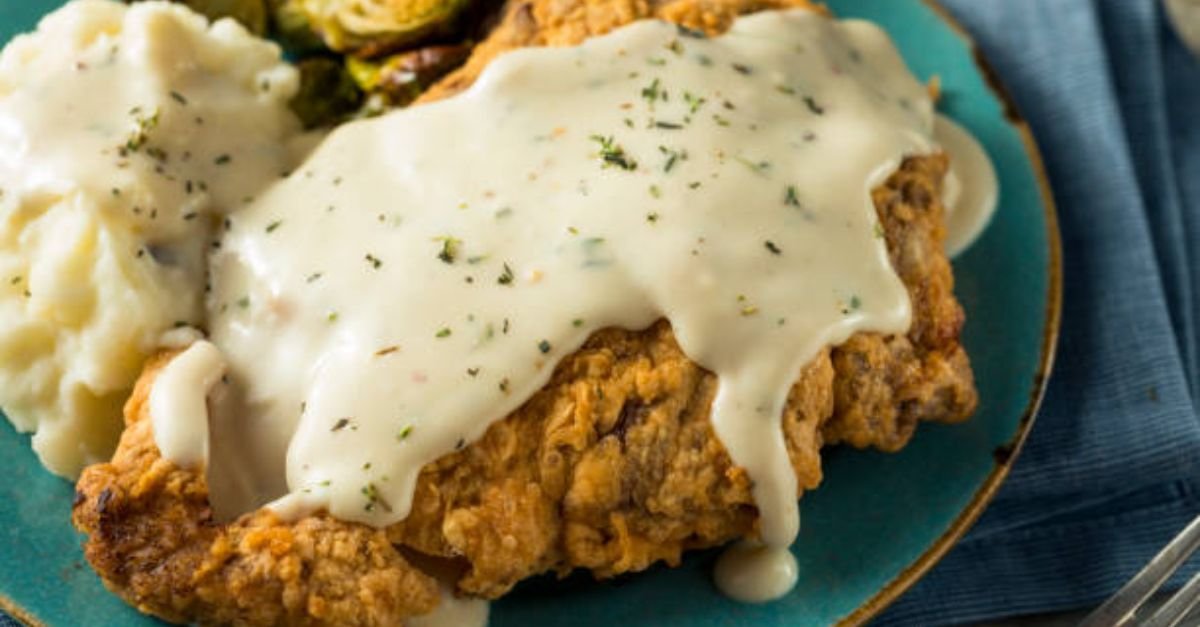
Place a crispy chicken fried steak on a warm plate or a bed of mashed potatoes. Ladle a generous amount of the hot, peppery country gravy over the top, letting it cascade down the sides. Garnish with a sprinkle of fresh parsley or an extra crack of black pepper, if desired. Serve immediately.
Nutrition Facts (Approximate per serving)
Note: Nutritional information is an estimate and will vary based on specific ingredients, oil absorption, and serving size.
| Nutrient | Amount |
|---|---|
| Calories | 890 kcal |
| Protein | 45 g |
| Fat | 52 g |
| Saturated Fat | 14 g |
| Carbohydrates | 62 g |
| Fiber | 3 g |
| Sugar | 8 g |
| Sodium | 1350 mg |
| Cholesterol | 210 mg |