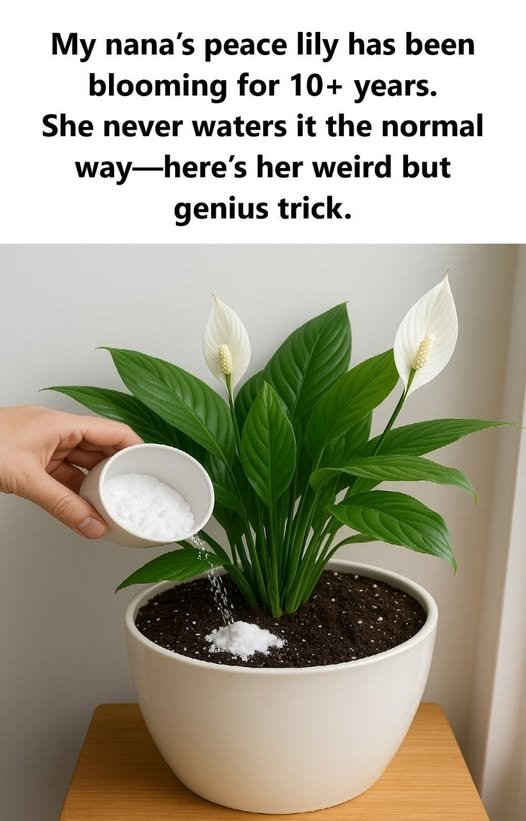
Peace Lily Care Secret: Forget Overwatering—Use This Instead for Lasting Beauty
Peace lilies are loved for their elegant white blooms and glossy green leaves, but many plant owners struggle to keep them healthy long-term. The biggest mistake? Improper watering. While peace lilies do need moisture, constantly watering them is often what causes drooping leaves, yellowing, and root rot.
The real secret to a beautiful, long-lasting peace lily isn’t watering more—it’s watering smarter and focusing on humidity, soil, and proper care habits.
Why Overwatering Hurts Peace Lilies
Peace lilies naturally grow in warm, humid forest environments where soil stays lightly moist but never soggy. When watered too frequently:
- Roots become waterlogged
- Oxygen can’t reach the root system
- Leaves turn yellow or brown
- Flowers fade quickly
Many people think drooping means the plant needs more water, but often it means the roots are stressed.
The Real Secret: Moisture Balance, Not Constant Watering
Instead of watering on a schedule, focus on soil moisture and humidity.
1. Check the Soil, Not the Calendar
Before watering, insert your finger about 1 inch into the soil:
- If it feels dry → water lightly
- If it feels damp → wait
Peace lilies prefer soil that is evenly moist, not soaked.
2. Use Proper Drainage
A pot with drainage holes is essential. Standing water at the bottom of the pot leads to root rot and weak growth.
Tip: Empty the saucer after watering so the plant never sits in water.
3. Increase Humidity Instead of Extra Water
Peace lilies thrive in humidity. Instead of overwatering, try:
- Lightly misting leaves
- Placing the pot near other plants
- Using a pebble tray with water underneath (not touching the pot bottom)
This mimics their natural environment and keeps leaves lush.
4. Use Room-Temperature Water
Cold water can shock the roots. Always use room-temperature, filtered or settled water if possible.
5. Feed Lightly, Not Often
Over-fertilizing can cause leaf burn and fewer blooms. Use a balanced houseplant fertilizer at half strength every 6–8 weeks during spring and summer only.
Signs Your Peace Lily Is Happy
- Upright, glossy leaves
- Deep green color
- Regular blooming
- Leaves perk up within hours after proper watering
A healthy peace lily may still droop slightly when thirsty—but it should recover quickly after watering.
Common Peace Lily Problems (and Fixes)
Drooping Leaves
→ Check soil moisture first; water only if dry
Brown Leaf Tips
→ Increase humidity; reduce fertilizer
Yellow Leaves
→ Often a sign of overwatering
No Flowers
→ Needs brighter indirect light and less fertilizer
Best Placement for Lasting Beauty
- Bright, indirect light
- Away from direct sunlight
- Warm room with stable temperature
- Bathrooms and kitchens often work well due to humidity
Final Thoughts
The secret to a stunning peace lily isn’t constant watering—it’s balanced care. By focusing on soil moisture, humidity, proper drainage, and gentle feeding, your peace lily can stay healthy, glossy, and blooming for years.
Sometimes, doing less is exactly what your plant needs.