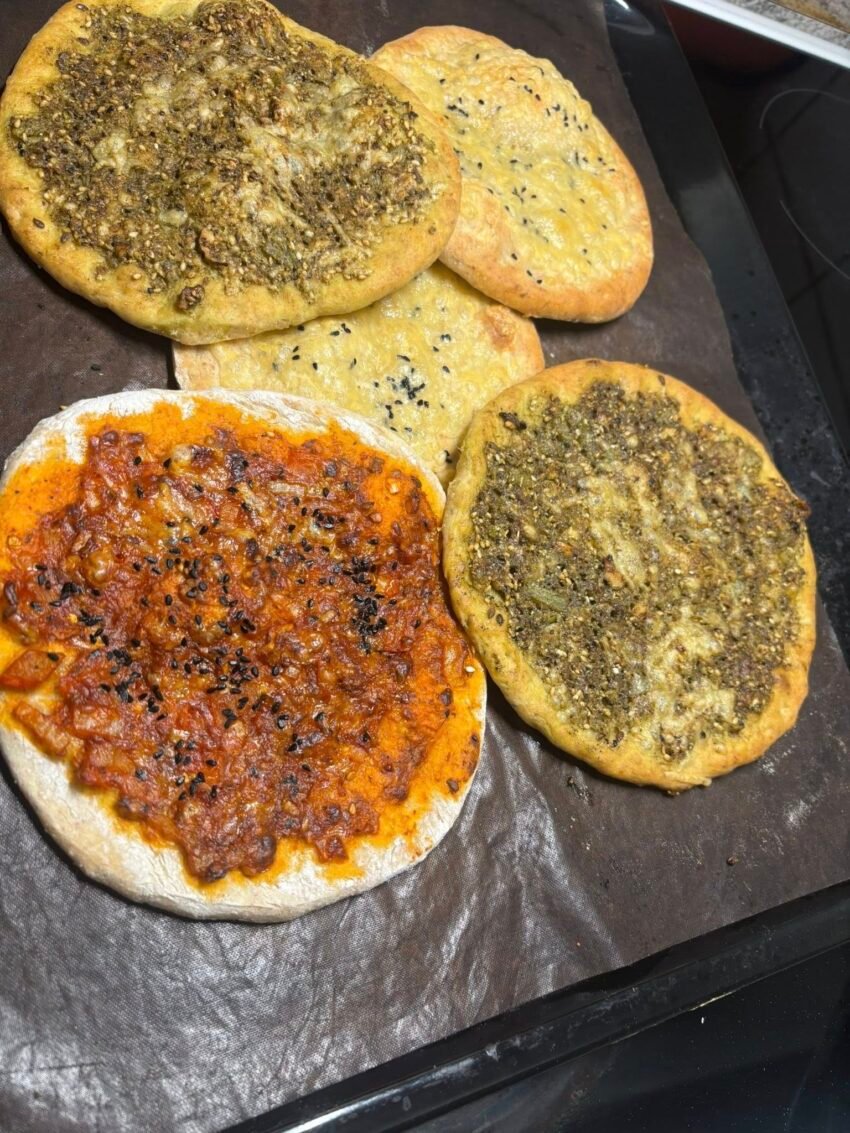
Manakish (Lebanese Flatbread with Zaatar)
Manakish (also spelled manaqish or manakeesh) is a beloved Middle Eastern flatbread, most commonly enjoyed for breakfast or brunch across Lebanon, Syria, Palestine, and Jordan. Soft and slightly chewy with a crisp base, manakish is traditionally topped with zaatar, cheese, or ground meat, then baked until fragrant and golden.
Often compared to pizza, manakish is simpler, lighter, and deeply aromatic thanks to olive oil and herbs. It’s served warm, folded in half, and eaten by hand—comforting, satisfying, and incredibly versatile. This homemade manakish recipe gives you bakery-style results using basic pantry ingredients and a simple dough.
What Is Manakish?
Manakish is a yeast-based flatbread topped before baking. The most iconic version is zaatar manakish, made with a mixture of dried thyme, sesame seeds, sumac, and olive oil. Other popular toppings include Akkawi or mozzarella cheese, spiced minced meat (lahm bi ajeen), or vegetables.
Unlike pizza dough, manakish dough is softer and less elastic, designed to stay tender rather than crunchy. It bakes quickly at high heat and is best enjoyed fresh from the oven.
Ingredients
For the Dough
-
3 cups all-purpose flour
-
1 tablespoon sugar
-
1 teaspoon salt
-
2 teaspoons instant yeast
-
¾ to 1 cup warm water
-
¼ cup olive oil
For the Zaatar Topping
-
½ cup zaatar spice blend
-
½ cup extra virgin olive oil
Equipment Needed
-
Mixing bowl
-
Measuring cups and spoons
-
Baking sheet or pizza stone
-
Parchment paper
-
Rolling pin (optional)
How to Make Manakish
Step 1: Make the Dough
In a large bowl, combine flour, sugar, salt, and yeast. Mix well. Add olive oil and gradually pour in warm water while mixing until a soft, slightly sticky dough forms.
Turn the dough onto a lightly floured surface and knead for about 8–10 minutes until smooth and elastic. If using a stand mixer, knead with a dough hook for 5–6 minutes.
Step 2: Let the Dough Rise
Shape the dough into a ball and place it in a lightly oiled bowl. Cover with a clean kitchen towel or plastic wrap and let it rise in a warm place for about 1 hour, or until doubled in size.
Step 3: Prepare the Zaatar Mixture
In a small bowl, mix the zaatar with olive oil until it forms a spreadable paste. The mixture should be loose, not dry.
Step 4: Divide and Shape
Preheat your oven to 475°F (245°C). Line a baking sheet with parchment paper.
Punch down the risen dough and divide it into 6–8 equal pieces. Roll each piece into a ball, then flatten it into a circle about 5–6 inches wide. You can use your fingers or a rolling pin.
Step 5: Add the Topping
Spread a generous tablespoon of the zaatar mixture over each dough round, leaving a small border around the edges. Press lightly so the topping adheres to the dough.
Step 6: Bake
Place the manakish onto the prepared baking sheet and bake for 8–10 minutes, or until the edges are lightly golden and the base is fully cooked.
Remove from the oven and brush the edges with a little olive oil if desired.
Serving Suggestions
Manakish is best served warm. Traditionally, it’s enjoyed:
-
Folded in half and eaten by hand
-
With fresh vegetables like tomatoes, cucumbers, and olives
-
Alongside labneh, yogurt, or hummus
-
With mint tea or Arabic coffee
It can be eaten for breakfast, brunch, or as a light meal any time of day.
Popular Manakish Variations
-
Cheese Manakish: Top with Akkawi, mozzarella, or a mix of cheeses
-
Zaatar & Cheese: A perfect balance of savory and creamy
-
Lahm Bi Ajeen: Minced meat mixed with spices, onions, and tomatoes
-
Spinach Manakish: Tangy spinach filling with lemon and onions
Tips for Perfect Manakish
-
Use high-quality olive oil for the best flavor
-
Don’t overload the topping—less is more
-
Bake on a hot surface for proper puffing
-
Eat fresh—manakish is best the day it’s made
Storage and Reheating
Manakish can be stored in an airtight container at room temperature for up to 1 day or refrigerated for up to 3 days. Reheat in the oven or air fryer for a few minutes until warm and soft.
Final Thoughts
Homemade manakish brings the flavors of the Middle East straight into your kitchen. With its soft dough, fragrant zaatar, and crisp edges, it’s a simple recipe that delivers bold, comforting flavor every time. Once you try it, it’s sure to become a regular part of your baking routine.