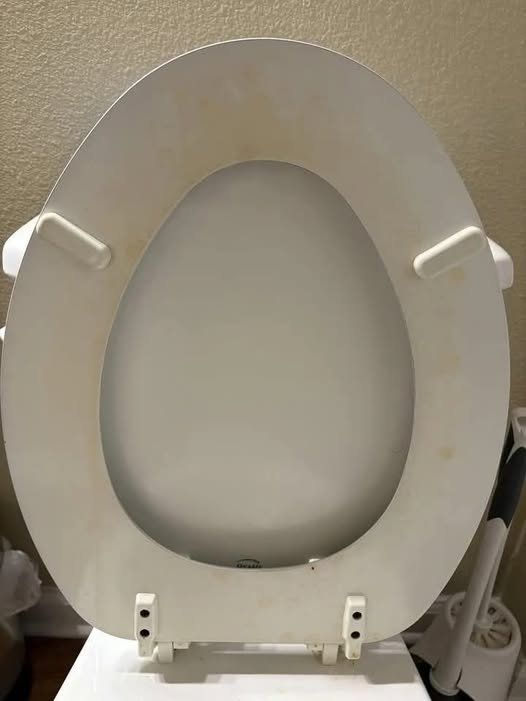
That Gross Yellow Ring: Here’s How I Actually Got Rid of Toilet Stains
If you’ve ever lifted the toilet seat and been greeted by that stubborn yellow or brown ring, you know how frustrating it can be. No matter how often you clean, scrub, or flush, the stain seems to come back—sometimes darker, sometimes thicker, and always embarrassing.
I dealt with this exact problem for years. I tried store-bought cleaners, bleach, fancy gels, and even those blue toilet tablets. Some helped temporarily, but nothing truly removed the stain. Until I finally learned what that yellow ring really is—and how to get rid of it properly.
This is not a miracle hack or an overnight trick. It’s what actually worked for me, and it’s backed by basic chemistry and real-world cleaning experience.
What That Yellow Ring Really Is
First, it helps to understand what you’re fighting.
That yellow or brown ring at the waterline is usually a combination of:
-
Hard water mineral deposits (calcium, lime, iron)
-
Urine scale (a hardened buildup from repeated contact)
-
Bacteria trapped inside mineral layers
Bleach alone doesn’t work because bleach disinfects—it doesn’t dissolve minerals. That’s why the stain may lighten but never disappear.
Once I understood that the problem was mineral-based, everything changed.
Why Regular Toilet Cleaners Often Fail
Most common toilet cleaners fall into two categories:
-
Bleach-based – good for germs, bad for mineral buildup
-
Mild detergents – good for surface dirt, useless on scale
The yellow ring lives below the surface, bonded to the porcelain. Scrubbing harder just wastes energy and can scratch the bowl, making future stains worse.
The key is breaking down the minerals, not scrubbing blindly.
What Actually Worked for Me
After a lot of trial and error, this method finally removed the stain completely—and kept it from coming back quickly.
Step 1: Lower the Water Level
This step matters more than people realize.
-
Turn off the toilet’s water supply
-
Flush once and hold the handle down
-
Use a cup or sponge to remove remaining water near the ring
You want the stained area exposed so the cleaner can work directly on it.
Step 2: Use an Acidic Cleaner (Not Bleach)
Minerals dissolve in acid.
You can use:
-
White vinegar
-
Cleaning-grade citric acid
-
A commercial descaling toilet cleaner
I personally used white vinegar combined with patience.
-
Soak paper towels or toilet paper in vinegar
-
Press them firmly against the stained ring
-
Leave them in place for at least 1–2 hours (overnight for heavy buildup)
This soaking step is where the magic happens.
Step 3: Gentle Scrubbing (The Right Tool Matters)
After soaking:
-
Remove the paper towels
-
Use a pumice stone designed for toilets or a stiff nylon brush
Do not use metal or abrasive pads.
With the minerals softened, the stain should begin lifting easily. In my case, the ring faded immediately and disappeared completely after a few passes.
Step 4: Rinse and Inspect
Turn the water supply back on and flush.
If any faint discoloration remains:
-
Repeat the vinegar soak for another hour
-
Lightly scrub again
Old stains may take two rounds, but they do come off.
What I Stopped Doing (And Why)
Once the stain was gone, I changed a few habits that made a huge difference:
-
❌ Stopped using bleach as my main cleaner
-
❌ Stopped letting stains sit for weeks
-
❌ Stopped using harsh scrubbers
Bleach has its place, but not for mineral stains.
How I Keep the Yellow Ring From Coming Back
Prevention is much easier than removal.
Here’s what works long-term:
Weekly Quick Maintenance
-
Pour 1 cup of vinegar into the bowl
-
Let sit for 15 minutes
-
Light brush and flush
Monthly Deep Prevention
-
Let vinegar or citric acid sit for 1 hour
-
Light scrub at the waterline
If You Have Very Hard Water
-
Consider a toilet bowl descaler once a month
-
A whole-house or point-of-use water softener helps significantly
Common Myths About Toilet Stains
“Just scrub harder.”
This damages porcelain and makes stains return faster.
“Bleach will fix it.”
Bleach disinfects—it doesn’t dissolve minerals.
“It’s just dirt.”
It’s hardened scale bonded to the surface.
Understanding this is the difference between constant frustration and a clean toilet.
Is This Method Safe?
Yes—when done correctly.
-
Vinegar and citric acid are safe for porcelain
-
Pumice stones made for toilets are safe when wet
-
Avoid mixing vinegar with bleach (dangerous fumes)
If your toilet is very old or already scratched, test gently first.
Final Thoughts
That gross yellow ring isn’t a sign that you’re dirty or bad at cleaning. It’s a chemical problem, not a scrubbing problem. Once I stopped fighting it the wrong way and started treating it like mineral buildup, the stain finally disappeared—for good.
If you’re tired of wasting money on cleaners that don’t work, try this approach. It’s simple, affordable, and most importantly—it actually works.
A clean toilet bowl isn’t about perfection. It’s about knowing what you’re dealing with and using the right method.