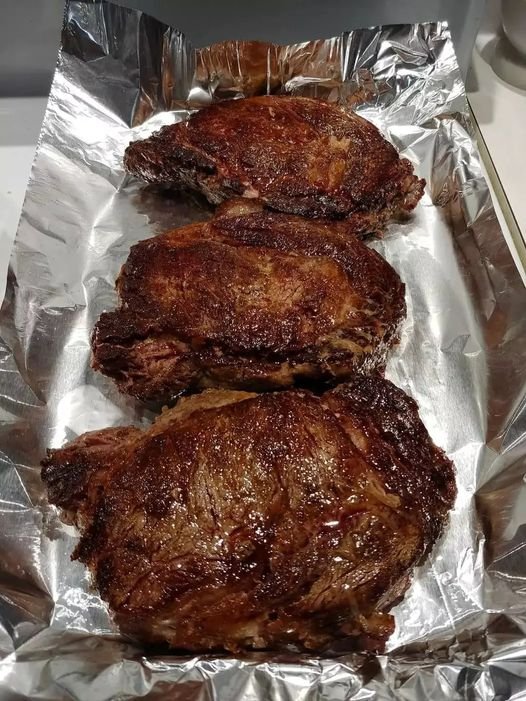
Perfect Ribeye Steak
Ribeye steak is a favorite for its marbling, tenderness, and rich flavor. Whether you’re grilling, pan-searing, or broiling, the key to a perfect ribeye is high heat, proper seasoning, and letting it rest. This guide will show you how to cook a ribeye steak that’s juicy, flavorful, and restaurant-quality.
Ingredients
-
2 ribeye steaks (about 12 oz each, 1–1.5 inches thick)
-
2 tablespoons olive oil
-
1 teaspoon salt
-
½ teaspoon black pepper
-
2 cloves garlic, smashed (optional)
-
1–2 sprigs fresh rosemary or thyme (optional)
-
2 tablespoons butter (optional, for finishing)
Instructions
1. Prepare the Steak
-
Remove steaks from the fridge and let them sit at room temperature for 30–45 minutes.
-
Pat dry with paper towels to remove excess moisture.
-
Brush lightly with olive oil and season generously with salt and pepper on both sides.
2. Preheat Your Pan or Grill
-
For pan-searing: Heat a cast-iron skillet over high heat until very hot.
-
For grilling: Preheat the grill to high heat (450–500°F / 230–260°C).
3. Cook the Steak
-
Pan-Searing: Place the steak in the hot skillet. Sear 3–5 minutes per side for medium-rare, adjusting time for thickness and preferred doneness.
-
Grilling: Place steaks on the hot grill. Cook 4–6 minutes per side for medium-rare.
Optional: During the last minute of cooking, add butter, garlic, and herbs to the pan. Spoon the melted butter over the steak for added flavor.
4. Check for Doneness
Use a meat thermometer for accuracy:
-
Rare: 120–125°F (49–52°C)
-
Medium-Rare: 130–135°F (54–57°C)
-
Medium: 140–145°F (60–63°C)
-
Medium-Well: 150–155°F (65–68°C)
-
Well-Done: 160°F+ (71°C+)
5. Rest the Steak
Remove the steak from heat and let it rest for 5–10 minutes. This allows juices to redistribute and keeps the steak moist.
6. Serve
Slice against the grain for maximum tenderness. Serve with sides like roasted vegetables, mashed potatoes, or a fresh salad.
Tips for the Best Ribeye Steak
-
Don’t overcrowd the pan—cook one steak at a time if needed.
-
Use high heat to create a crust without overcooking the inside.
-
Let it rest—skipping this step can cause the steak to lose its juices.
-
Season generously—ribeye has enough fat to handle a lot of seasoning.
-
Optional finishing touches: compound butter, garlic, or fresh herbs elevate the flavor.
Variations
-
Garlic Butter Ribeye: Add a tablespoon of garlic butter on top after cooking.
-
Herb-Crusted Ribeye: Mix salt, pepper, and chopped fresh rosemary or thyme to season.
-
Smoky Grill Ribeye: Use wood chips or a charcoal grill for smoky flavor.
-
Oven-Finished Ribeye: Sear on the stovetop and finish in a 400°F (200°C) oven for 5–10 minutes.
Storage
-
Ribeye is best served fresh, but leftover cooked steak can be stored in an airtight container in the refrigerator for up to 3 days.
-
Reheat gently in a skillet over low heat or in the oven to avoid overcooking.
Final Thoughts
Ribeye steak is a luxurious, flavorful cut that’s surprisingly easy to cook at home. With proper seasoning, high heat, and a short rest, you can achieve a steakhouse-quality meal in your own kitchen. Whether grilled, pan-seared, or oven-finished, ribeye steak is a guaranteed crowd-pleaser.