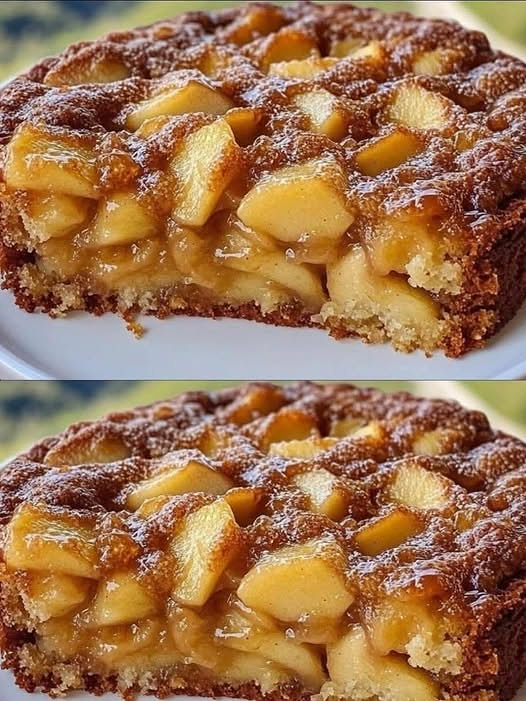
Prep Time: 30 minutes
Cook Time: 55-65 minutes
Total Time: About 1 hour 40 minutes (plus cooling)
Difficulty: Easy
Intensity: Low to Moderate – A straightforward mixing method with some simple fruit prep.
Ingredients
For the Apple Layer:
-
5-6 medium tart apples (such as Granny Smith or Braeburn), about 1.5 lbs / 700g
-
1 tablespoon fresh lemon juice
-
2 tablespoons granulated sugar
-
1 teaspoon ground cinnamon
-
¼ teaspoon freshly grated nutmeg (optional)
For the Cake Batter:
-
1 ½ cups (190g) all-purpose flour
-
1 ½ teaspoons baking powder
-
¼ teaspoon salt
-
¾ cup (150g) granulated sugar
-
½ cup (1 stick / 113g) unsalted butter, softened to room temperature
-
2 large eggs, at room temperature
-
1 teaspoon pure vanilla extract or vanilla sugar
-
⅓ cup (80ml) whole milk or plain yogurt
For the Topping:
-
3 tablespoons demerara or pearl sugar (or coarse sugar)
-
¼ cup (25g) sliced almonds (optional)
Equipment: 9-inch (23 cm) springform pan, parchment paper, hand mixer or stand mixer, mixing bowls.
Instructions
Step 1: Prepare the Pan & Preheat
Preheat your oven to 350°F (175°C). Grease the sides of a 9-inch springform pan and line the bottom with a round of parchment paper. This ensures a clean release and easy serving.
Step 2: Prepare the Spiced Apples
Peel, core, and slice the apples into ¼-inch (½ cm) thick slices. Place them in a medium bowl and immediately toss with the lemon juice to prevent browning. Add the 2 tablespoons of sugar, cinnamon, and nutmeg (if using). Toss until evenly coated. Set aside to macerate while you make the batter.
Step 3: Make the Cake Batter
In a medium bowl, whisk together the flour, baking powder, and salt. Set aside.
In a large mixing bowl (or the bowl of a stand mixer fitted with the paddle attachment), beat the softened butter and ¾ cup sugar together on medium-high speed for 2-3 minutes, until light and fluffy.
Add the eggs, one at a time, beating well after each addition. Scrape down the sides of the bowl. Beat in the vanilla extract.
With the mixer on low, add the dry ingredients in three parts, alternating with the milk or yogurt in two parts, beginning and ending with the dry ingredients. Mix just until the flour is incorporated; do not overmix. The batter will be thick and smooth.
Step 4: Assemble the Cake
Spread the thick cake batter evenly into the bottom of your prepared springform pan. It will be a relatively thin layer.
Arrange the spiced apple slices in a tight, concentric circle over the batter, pressing them in slightly. You can create a neat pattern or simply scatter them for a more rustic look—either is authentically Swedish! Pour any juices from the apple bowl over the top.
Step 5: Add the Topping & Bake
Sprinkle the demerara sugar evenly over the entire surface of the apples. Follow with the sliced almonds, if using.
Place the pan in the center of the preheated oven and bake for 55 to 65 minutes. The cake is done when the edges are deep golden brown, the topping is crisp, and a toothpick inserted into the cake portion (not an apple slice) comes out clean or with a few moist crumbs.
Step 6: Cool & Serve
Let the cake cool in the pan on a wire rack for 20 minutes. Then, carefully run a knife around the edge and release the springform ring. Allow the cake to cool completely, or until just slightly warm, before slicing. This resting time allows the structure to set for clean cuts.
Serve plain, dusted with powdered sugar, or with a dollop of lightly sweetened whipped cream or a scoop of vanilla ice cream (vaniljglass).
Chef’s Notes & Variations
-
Apple Choice: Use a firm, tart apple that holds its shape when baked. Granny Smith is perfect, but Honeycrisp, Pink Lady, or Braeburn are also excellent.
-
The Swedish Touch: Pearl sugar (pärlsocker) is traditional for the crunchy topping and can be found in IKEA or specialty stores. Demerara sugar is a great substitute. Almonds are classic, but you can omit them for a nut-free version.
-
Make it Your Own: Add ½ teaspoon of cardamom to the flour mixture for a wonderfully Nordic twist. For a richer cake, substitute the milk with an equal amount of sour cream or full-fat Greek yogurt.
-
Storage: Store covered at room temperature for up to 2 days, or in the refrigerator for up to 4 days. It can also be frozen (whole or in slices) for up to 3 months. Thaw overnight in the refrigerator.
Nutrition Information (Per serving, based on 12 servings)
-
Calories: ~285 kcal
-
Total Fat: 11g
-
Saturated Fat: 6g
-
-
Cholesterol: 55mg
-
Sodium: 115mg
-
Total Carbohydrates: 44g
-
Dietary Fiber: 2g
-
Sugars: 28g
-
-
Protein: 4g
Note: Nutritional information is an estimate calculated using an online tool and will vary based on specific ingredients and portion sizes used. The optional almonds are not included in this calculation.
Serving Suggestion: This cake is the heart of a proper fika—the Swedish coffee break. Brew a pot of strong coffee, invite a friend, and slice into this fragrant, comforting cake. It’s a simple recipe that yields extraordinary results: a home filled with the scent of baked apples and cinnamon, and a dessert that tastes like a warm embrace.