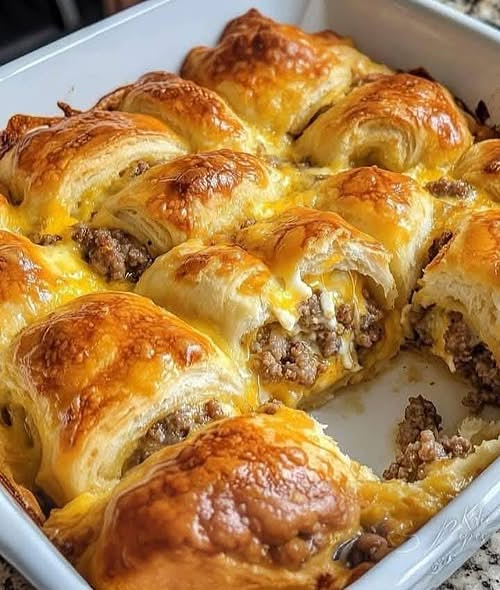
Prep Time: 20 minutes | Cook Time: 15-18 minutes | Total Time: ~40 minutes
Difficulty: Beginner-Friendly | Yield: 8 hearty rolls
There’s something magical about the moment flaky, buttery crescent dough meets savory, herbaceous breakfast sausage. These Breakfast Sausage Crescent Rolls are the ultimate morning shortcut—transforming simple ingredients into an impressive, crowd-pleasing breakfast in under an hour. Perfect for busy weekdays, leisurely weekend brunches, or even a make-ahead freezer meal, they deliver a satisfying combination of textures and flavors that will have everyone reaching for seconds.
Ingredients
-
1 (8-ounce) tube refrigerated crescent roll dough
-
½ pound (8 ounces) ground breakfast sausage (mild or spicy, based on preference)
-
¾ cup shredded sharp cheddar cheese
-
2 tablespoons finely diced onion
-
1 teaspoon maple syrup or brown sugar (optional, for a hint of sweetness)
-
½ teaspoon fennel seeds, crushed (optional, enhances sausage flavor)
-
1 large egg (for egg wash)
-
1 tablespoon water (for egg wash)
-
Everything bagel seasoning, sesame seeds, or poppy seeds for garnish (optional)
For Serving (Optional):
-
Honey, hot honey, or maple syrup for drizzling
-
Side of scrambled eggs or fresh fruit
Equipment
-
Medium skillet
-
Wooden spoon or spatula
-
Measuring cups and spoons
-
Small bowl (for egg wash)
-
Pastry brush or spoon
-
Baking sheet
-
Parchment paper or silicone baking mat
-
Plate lined with paper towels
Instructions
Step 1: Prepare the Filling
In a medium skillet over medium-high heat, cook the ground breakfast sausage and diced onion. Use your spoon to break the sausage into small, crumbled pieces. Cook for 5-7 minutes, or until the sausage is thoroughly browned and cooked through, and the onion is softened. If using, stir in the maple syrup and crushed fennel seeds during the last minute of cooking.
Transfer the sausage mixture to the paper towel-lined plate to drain excess grease. Allow it to cool for 5-10 minutes. Once cooled, mix in the shredded cheddar cheese. This cooling step is crucial—it prevents the hot filling from melting the crescent dough too quickly and making it difficult to handle.
Step 2: Assemble the Rolls
Preheat your oven to 375°F (190°C). Line a baking sheet with parchment paper or a silicone mat.
Open the tube of crescent dough and carefully unroll the sheet onto a clean surface. Separate the dough along the perforated lines into 8 triangles.
Spoon 2-3 tablespoons of the cooled sausage and cheese mixture onto the wider end of each dough triangle. Gently press the mixture down slightly.
Starting at the wide end, roll up each triangle tightly, tucking the dough around the filling as you go. Place each rolled crescent seam-side down on the prepared baking sheet, spacing them about 2 inches apart to allow for expansion. Curve the ends slightly to form the classic crescent shape.
Step 3: Apply the Egg Wash & Bake
In a small bowl, whisk together the egg and 1 tablespoon of water. Using a pastry brush or the back of a spoon, lightly brush the top of each crescent with the egg wash. This will give them a beautiful, glossy golden-brown finish. Sprinkle immediately with everything bagel seasoning or seeds, if desired.
Bake on the center rack for 15-18 minutes, or until the rolls are puffed, deeply golden brown, and the filling is hot. The intense, dry heat of the oven will cause the dough layers to separate and create the desired flaky texture.
Step 4: Cool and Serve
Remove the baking sheet from the oven and let the crescents cool on the sheet for 2-3 minutes. This allows the molten-hot cheese filling to set slightly, preventing burns.
Serve warm. For the ultimate experience, drizzle with a little hot honey or serve alongside scrambled eggs.
Chef’s Notes & Variations
-
Make-Ahead Magic: Assemble the rolls completely, place them on a baking sheet, and freeze until solid. Then transfer to a freezer bag. Bake straight from the freezer, adding 3-5 extra minutes to the bake time.
-
Filling Twists: Swap the cheddar for pepper jack, add 1 tablespoon of finely chopped roasted red pepper, or mix in a spoonful of cream cheese for an extra-rich filling.
-
Air Fryer Method: These cook beautifully in an air fryer at 350°F for 9-12 minutes, in batches. The circulating hot air yields an exceptionally crisp exterior.
-
Ensuring Flakiness: Avoid overstuffing the rolls, which can prevent the dough from baking through and becoming flaky. Handle the dough as little as possible to keep it cool.
Nutrition Information (Per Roll, 1 of 8)
-
Calories: ~280 kcal
-
Total Fat: 19g
-
Saturated Fat: 7g
-
-
Cholesterol: 50mg
-
Sodium: 580mg
-
Total Carbohydrates: 17g
-
Dietary Fiber: 0g
-
Sugars: 4g (includes sugars from dough)
-
-
Protein: 10g
Note: Nutritional values are estimates calculated using a generic recipe analyzer and will vary based on specific ingredient brands (especially sausage and crescent dough) and any modifications you make. For lower sodium, seek out low-sodium sausage and cheese.
The Last Bite
These Breakfast Sausage Crescent Rolls are more than just a recipe; they’re a testament to the power of a clever, delicious shortcut. In a world of complicated brunch menus, they stand out for their simplicity, reliability, and sheer comforting goodness. The time investment is minimal, but the payoff—a tray of warm, flaky, savory pastries—is maximum. They’re the kind of recipe you’ll find yourself memorizing, the one friends will ask you to bring, and the cozy breakfast solution you’ll turn to again and again. So preheat that oven, and get ready for the easiest win of your morning.
Enjoy your homemade, heartwarming breakfast