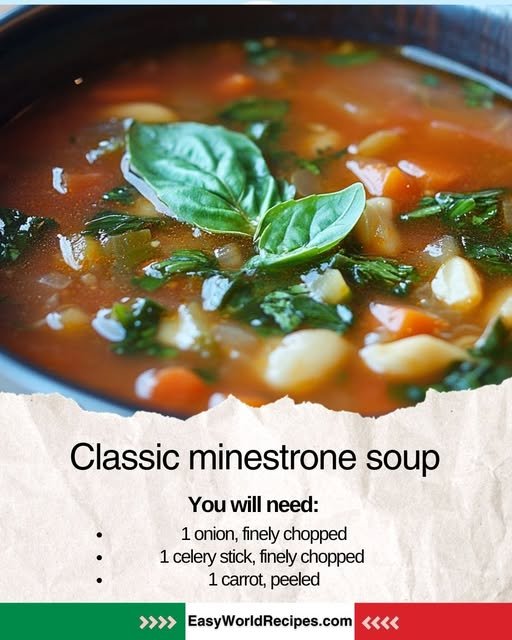
Classic Minestrone Soup: A Hearty and Healthy Italian Favorite
Minestrone soup is a timeless Italian classic, packed with vegetables, beans, pasta, and fresh herbs. Perfect for cozy dinners or as a nutritious lunch, this soup is both filling and versatile. With its rich flavors and wholesome ingredients, it’s no wonder minestrone has remained a staple in kitchens around the world. This guide will walk you through a step-by-step recipe, plus tips for making it your own.
Ingredients
For 6–8 servings, you’ll need:
Vegetables:
-
2 tablespoons olive oil
-
1 medium onion, diced
-
2 carrots, diced
-
2 celery stalks, diced
-
2 cloves garlic, minced
-
1 zucchini, diced
-
1 potato, peeled and diced
-
1 cup green beans, chopped
-
1 cup cabbage, shredded (optional)
Beans and Pasta:
-
1 can (400g) cannellini beans or kidney beans, drained and rinsed
-
½ cup small pasta (ditalini, elbow macaroni, or small shells)
Liquids and Broth:
-
6 cups vegetable or chicken broth
-
1 can (400g) diced tomatoes
-
2 tablespoons tomato paste
Herbs and Seasonings:
-
1 teaspoon dried oregano
-
1 teaspoon dried basil
-
½ teaspoon dried thyme
-
1 bay leaf
-
Salt and black pepper, to taste
-
Fresh parsley or basil, chopped for garnish
-
Grated Parmesan cheese for serving (optional)
Instructions
1. Prepare the Vegetables
Start by washing and chopping all vegetables into bite-sized pieces. Uniform sizes help the soup cook evenly.
2. Sauté the Aromatics
In a large pot or Dutch oven, heat 2 tablespoons of olive oil over medium heat. Add the onion, carrots, and celery, cooking for 5–6 minutes until softened. Add the garlic and sauté for another minute until fragrant. This step builds the base flavor for your soup.
3. Add the Liquids and Tomato Base
Stir in the diced tomatoes and tomato paste, allowing the mixture to cook for 2–3 minutes. Then pour in the vegetable broth, and add the bay leaf, oregano, basil, and thyme. Bring to a gentle boil, then reduce heat to a simmer.
4. Cook the Vegetables
Add the potatoes, zucchini, green beans, and cabbage to the pot. Simmer uncovered for about 15–20 minutes, until all vegetables are tender but still slightly firm. Overcooking can make them mushy, so keep an eye on texture.
5. Add Beans and Pasta
Once the vegetables are almost done, stir in the cooked beans and small pasta. Continue simmering for 8–10 minutes until the pasta is al dente. If the soup becomes too thick, add a little more broth or water to reach your desired consistency.
6. Season to Taste
Taste the soup and add salt and black pepper as needed. If you like a little tang, a splash of red wine vinegar or lemon juice at the end brightens the flavors.
7. Serve Hot
Remove the bay leaf before serving. Ladle the soup into bowls and garnish with fresh parsley or basil. A sprinkle of grated Parmesan cheese adds a savory touch. Pair with crusty bread for a complete meal.
Tips for the Perfect Minestrone
-
Use seasonal vegetables: Minestrone is flexible—use what’s fresh and available. Peas, spinach, or squash are excellent substitutions.
-
Beans: Canned beans save time, but soaking and cooking dried beans can enhance flavor and texture.
-
Pasta timing: Cook the pasta directly in the soup just before serving, or cook it separately to prevent it from becoming mushy if reheating leftovers.
-
Make it ahead: Minestrone tastes even better the next day as the flavors meld. Reheat gently on the stove.
-
Add a protein boost: Include diced chicken, turkey, or sausage for a heartier meal.
Variations
-
Vegan Minestrone: Use vegetable broth and omit cheese for a plant-based version. Add nutritional yeast for a cheesy flavor.
-
Pesto Minestrone: Stir in a spoonful of fresh basil pesto when serving for a fragrant twist.
-
Spicy Minestrone: Add a pinch of chili flakes or diced red chili for some heat.
-
Creamy Minestrone: For a richer texture, stir in a little cream or coconut milk at the end.
Nutritional Benefits
Minestrone soup is not only delicious but also packed with nutrients:
-
Fiber: From beans, pasta, and vegetables, which helps digestion.
-
Vitamins and minerals: Carrots, zucchini, and cabbage provide vitamin A, C, and potassium.
-
Low fat: Especially when made with olive oil and vegetable broth.
-
Protein: Beans add plant-based protein, making it a satisfying meal.
Why Minestrone Is a Kitchen Staple
Minestrone is loved worldwide because it’s:
-
Versatile: Use whatever vegetables and beans you have on hand.
-
Budget-friendly: Simple ingredients make it affordable.
-
Nutritious: Packed with vitamins, fiber, and protein.
-
Comforting: Warm, hearty, and perfect for all seasons.
Conclusion
Classic Minestrone Soup is more than just a soup—it’s a wholesome, adaptable meal that brings warmth and nutrition to the table. By following this guide, you can enjoy a rich, flavorful soup made from fresh vegetables, beans, and herbs. Whether you’re cooking for family, meal-prepping for the week, or hosting friends, this minestrone will satisfy everyone’s taste buds.
Serve it with fresh bread, a sprinkle of Parmesan, or a drizzle of olive oil, and you have a healthy, comforting, and hearty dish that embodies the best of Italian home cooking.